
Governor Blagojevich in August signed SB 2733, a new law that will greatly
reduce the ability of communities to use TIF (Tax Increment Financing) funds to
demolish or alter National Register-listed properties or buildings that may be
“eligible” for Register listing. The bill was written by Landmarks Illinois
board member and attorney Richard Friedman and attorney Michael Rachlis, in
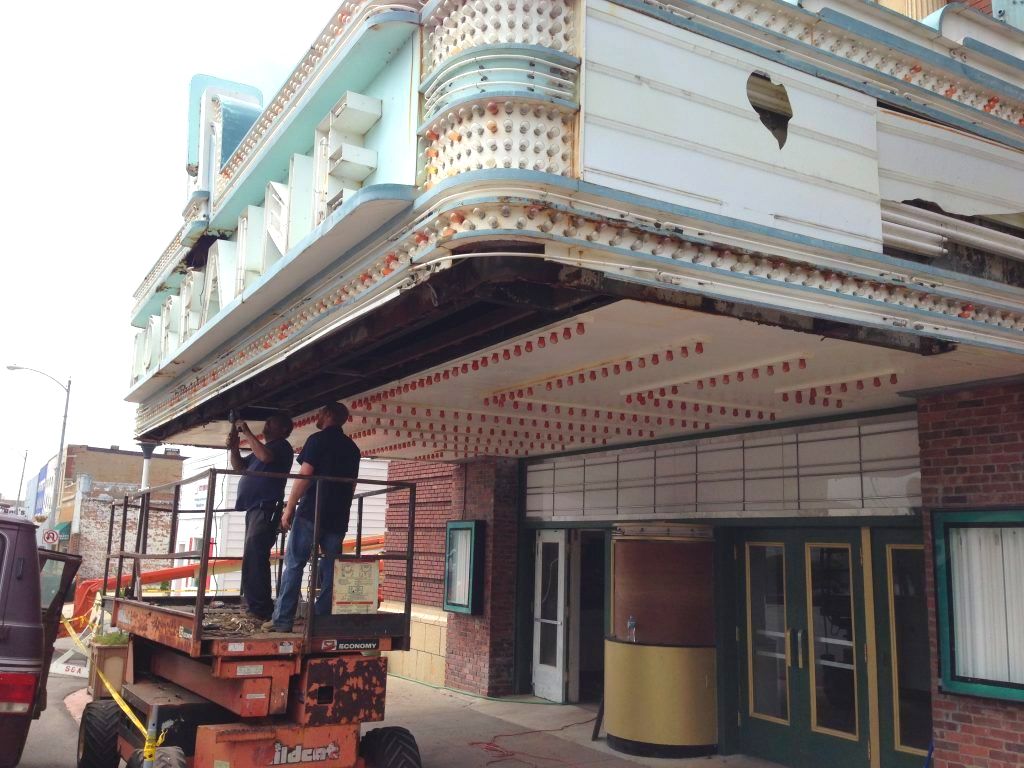
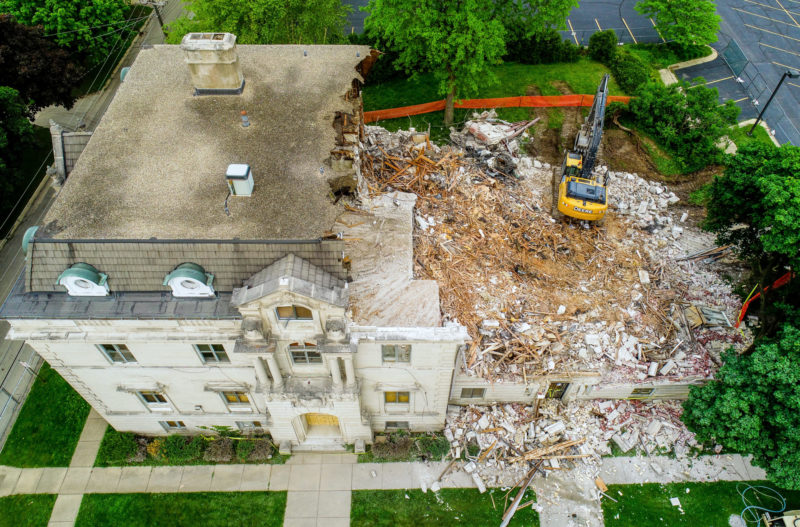
response to the Village of Lombard’s use of TIF funds in 2007 to demolish the
National Register-listed DuPage Theatre. There are almost 1,000 TIF districts in
389 communities throughout Illinois. The bill’s co-sponsors were Ill. Sen. Dan
Cronin (R-Elmhurst) and Ill. Rep. Robert Pritchard (R-Sycamore), both of whom
are members of the Illinois Legislature’s Historic Preservation Caucus.
Better Incentives for Better Preservation – H.R. 3159 reintroduced as H.R. 1043
Support H.R. 1043: Community Restoration and Revitalization Act
On
Feb. 14, 2007 H.R. 1043, formally known as H.R. 3159, the Community Restoration and Revitalization Act,
was reintroduced by Rep. Stephanie Tubbs Jones (D-Ohio) with Rep. Phil
English (R-PA) as the minority party lead. The Senate companion bill is S. 584.
The act, originally introduced in 2005 as H. R. 3159, contains
important amendments to the existing Federal Historic Rehabilitation Tax Credit
Program. These amendments deepen the program’s utility for community
revitalization and affordable housing, helping historic properties throughout
the state.
Some of the
Principal Amendments Include:
•
Making the 10%
credit available for rental housing and for buildings 50 years or older.
Currently, this credit is only available for commercial properties and buildings
“built before1936.” The 50 year date will avoid the need for future updates.
•
Expanding the
Federal Historic Rehabilitation Credit to 40% for projects that are $2 million
or less, which will benefit smaller “Main Street” type commercial rehab
developments. The 40% credit applies to the first $1 million in projects under
$2 million.
•
Broadening the tax
credit's application to apply to condominium developments and in so doing,
provides new support for the revitalization of urban neighborhoods nationwide.
The current provision requires the payback of the credit if the property is sold
within five years, which eliminates usage of this credit for many developers.
•
Improve the
coupling of the Low Income Housing Tax Credit and the Historic Tax Credit.
Currently using the credits together reduces the benefits of the individual
credits.
According to the
National Park Service, in 2005, the Federal Tax Incentives for Rehabilitating
Historic Buildings produced more than $3.1 billion in private investment,
created 52,464 jobs and created or renovated 14,354 housing units nationwide.
The proposed amendments in H.R. 1043 will help to make the message clearer
that historic preservation is good
for the economy.
WHAT YOU CAN DO
Rep. Rahm Emanuel
Rep. Jan Schakowsky
Rep. Luis Gutierrez
Letters of support
are needed from local officials, preservation commissions, mayors, business and
Main Street groups, developers and building owners.
If either is your congressman, please send them a big
thank you. Please have copies
of support letters sent to Landmarks, so we can track support to all legislators.
Thank you for your help. If you have any questions, contact Lisa DiChiera
director of advocacy at
dichieral@lpci.org
or call her at (312) 922-1742.
Over 80 Members
—
Bipartisan House &
Senate Support
The Illinois Historic Preservation
Legislative Caucus, since its formation in late 2005, has had several meetings
and gatherings. Senator Deanna Demuzio (D-Carlinville) and Rep. Rich Brauer
(R-Petersburg) are serving as co-chairs.
With over 80 members from both
the House and Senate – almost half of the Legislature - the Illinois Historic
Preservation Caucus is the largest issue-based, bi-partisan caucus in
Springfield. It was the second historic preservation caucus to be formed at
the state legislative level in the country after the state of Washington (1989).
In 2006, Hawaii established a cultural heritage caucus.
WHAT YOU CAN DO
1.
If your legislator has joined the caucus, please
thank him or her and tell them how important historic preservation is to
you & your community.
2.
If your legislator has not joined, please urge him or
her to do so.
3.
Refer to the PDF links
to view who has joined the caucus and to read about objectives Landmark
Illinois proposed
the caucus could address.
4.
Several caucus members have put forth bills that will benefit historic
preservation in the state of Illinois.
Please ask your state legislator to support these bills and if your
legislator was the lead sponsor, please thank them.
Just as it is your responsibility as a citizen to exercise your right to
vote, it is just as important to communicate with officials once they take
office. Let them know your communities’ concerns and interests. Stakeholders
promoting many different interests are in regular contact with elected
officials, and the historic preservation community must be active on this
front as well. To learn how to communicate effectively, view the following NTHP
Communicating with Elected Officials PDF.
Landmarks Illinois works with
Preservation Action
(PA) regularly to inform the public about preservation issues at the Federal
level. Preservation Action, a non-profit, preservation lobbying organization
based in Washington D.C., coordinates a network of community activists,
preservation professionals, historians, commercial investors and civic leaders
working together to advocate for our architectural heritage.
Preservation Action
monitors federal legislation and keeps members informed of its consequences for
preservation through weekly legislative updates, quarterly national meetings and
in-depth policy reports. For information go to
preservationaction.org.
Landmarks Illinois
Suite 1315
53 W. Jackson Blvd.
Chicago, IL 60604
tel. 312-922-1742
fax 312-922-8112