
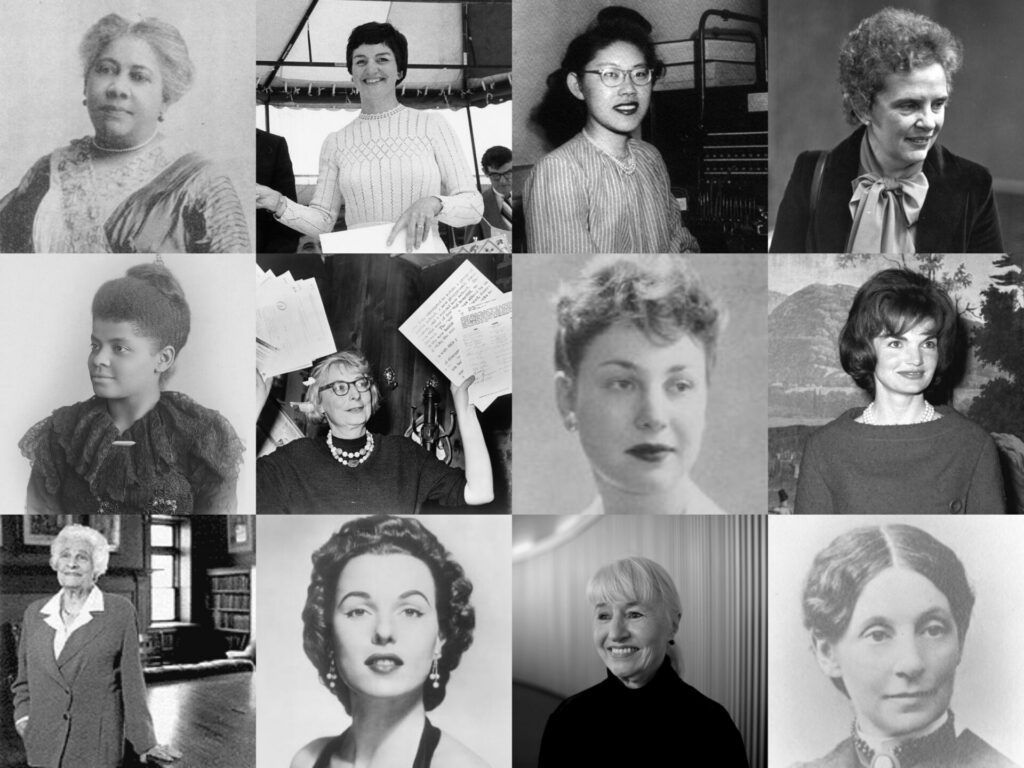
(Top row L-R: Mary B. Talbert, Joan Miller, Sue Kunitomi Embrey, Nellie Longsworth. Middle row L-R: Ida B. Wells Barnett, Jane Jacobs, Beverly Moss Spratt, Jacqueline Kennedy Onassis. Bottom row L-R: Marian Alschuler Despres, Bess Myerson, Gertrude Kerbis, Helen Pitts Douglass.)
March 4, 2026
By Bonnie McDonald, President & CEO, Landmarks Illinois
As Landmarks Illinois celebrates International Women’s Day this Sunday and Women’s History Month throughout March, we reflect on the leading role women have played in the U.S. preservation movement. Women have long led efforts to preserve cultural identity, ensuring traditions and rituals conveyed around food, textiles, storytelling, dance and faith, to name a few, are passed on. Cultivating interest in shared memory and history, and preserving places where one can touch this past, is an investment in social progress.
A shining example is the work of “the Saviors of Cedar Hill.” Progressive-era reformer Ida B. Wells-Barnett joined in a women-led effort to preserve Frederick Douglass’ home, Cedar Hill, in Washington, D.C., after the 1903 death of his widow, Helen Pitts Douglass. Wells and Mary B. Talbert organized women’s social clubs to pay off the property’s mortgage and ensure its perpetual care. Read more about the generations of enterprising women who saved Cedar Hill, now a National Historic Site under the management of the National Park Service.
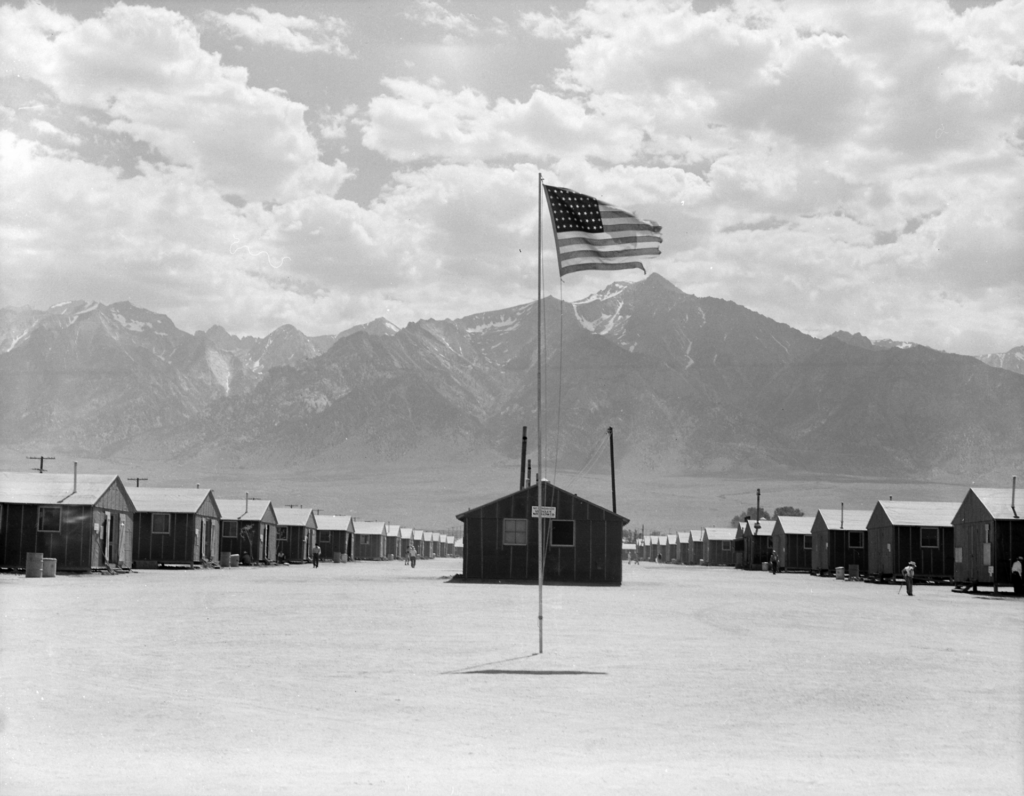
(Manzanar War Relocation Center in California.)
Representation – It matters
The National Park Service’s recognition of Cedar Hill’s persevering women preservationists is the exception, not the norm. A study revealed that prior to the federal government’s fiscal year 2014, less than eight percent of the places listed in the National Register of Historic Places tell the history of women, people of color and the LGBTQAI+ community combined.
Preservationists are working to close this gap, including moving women’s history into the forefront, especially during the 2020 centennial of the 19th Amendment’s passage. That year, the National Park Service honored four women who advocated to create national parks, including Sue Kunitomi Embrey, cofounder of the Manzanar Committee and leader of the campaign to have the Manzanar War Relocation Center designated a California historic landmark and National Park Service Historic Site.

(Skokie Public Library, designed by Gertrude Lempp Kerbis.)
New projects recognizing women
The National Trust for Historic Preservation launched its “Where Women Made History” initiative in 2020, led by Senior Director of Preservation Programs Chris Morris, and chaired by Landmarks Illinois Board Secretary Jean Follett.
Landmarks Illinois began its own initiative in 2020, the “Women Who Built Illinois” survey and database, a women-led effort calling attention to pioneering women architects like Gertrude Lempp Kerbis, along with engineers, developers and project managers.

(Paxton, Illinois, is a Main Street community. The Main Street Program was piloted by Mary Means at the National Trust for Historic Preservation 1977.)
Women preservationists throughout history
Women helped lay the foundation for the modern historic preservation movement. Jane Jacobs published “The Death and Life of Great American Cities” in 1961 about historic and older buildings serving as the fabric of New York City neighborhoods. A decade later, Jaqueline Kennedy Onassis and Bess Myerson would take on the preservation of Grand Central Terminal along with Beverly Moss Spratt, the first woman to chair the New York Landmarks Preservation Commission.
In 1975, Nellie Longsworth became the founding president of Preservation Action and passed critical preservation legislation, including the Federal Rehabilitation Credit. Mary Means at the National Trust for Historic Preservation piloted the Main Street Program in 1977, creating one of the most successful preservation programs in the nation.

(The Clarke House in Chicago.)
Women leading local preservation efforts
Concurrently, we see an empowered group of local preservation leaders, especially when we look at the history of preservation in Chicago. Thanks to advocacy by Pastor Kevin Anthony Ford and Preservation Futures’ Elizabeth Blasius, we know of founding preservation efforts by First Lady Margaret Ford of St. Paul Church of God in Christ, who, with her husband Reverend (future Bishop) Louis Henry Ford, preserved Chicago’s oldest home, the Clarke House, from 1941 to 1970.
Marian Alschuler Despres advocated for her husband, Alderman Leon Despres, to create what would become the Chicago Landmarks Commission in 1957 as part of the effort to save Frank Lloyd Wright’s Robie House. In the 1960s, community advocate Florence Scala fought (unsuccessfully, unfortunately) to prevent Mayor Richard Daley’s University of Illinois at Chicago campus from destroying her Little Italy community through urban renewal.
In 1966, a group of young architects and advocates, including Cynthia Weese and Susan Benjamin, stepped in to save the deteriorating H.H. Richardson-designed Glessner House on 18th Street, founding what became the Chicago Architecture Foundation and later the Chicago Architecture Center.

(Joan Miller (right) with Chicago Mayor Michael A. Bilandic in 1977.)
Women leading preservation organizations
At Landmarks Illinois, we have had a proud legacy of women in leadership roles beginning with Joan Miller, who took the helm as board president from 1973 to 1974. Ten women have served as President or Chair over our 55-year history. Seven out of our ten executive leaders have been women, serving a combined 42 years.
Our board and staff continue to be a majority of women, as is the leadership of our Skyline Council: Emily Sajdak, Amanda Marshall and Kelsey Kuhn. Our leadership mirrors that of national preservation organizations, which are majority women-led, along with many preservation authors, educators, professional service providers, regulators, community groups and partners.
We encourage all our partners to learn about the early and current stories of women preservationists in your community and lift them up on International Women’s Day, throughout Women’s History Month and every day.