

(The Sheldon Peck House. Credit: Jean Follett.)
July 24, 2026
By Amber Delgado, Technical Assistance & Programs Manager, and Kendra Parzen, Director of Preservation Services
(This article originally appeared in the June 2026 edition of our print newsletter, The Arch. Read The Arch here.)
On March 20, 2026, Landmarks Illinois joined a roundtable discussion at the Sheldon Peck Homestead in Lombard, co-hosted by U.S. Rep. Sean Casten and the Lombard Historical Society, to discuss why places like this historic home and former Underground Railroad site deserve a place in the National Register of Historic Places.
The Sheldon Peck Homestead
Born in 1797, Sheldon Peck was a prominent folk artist, abolitionist and equal rights advocate who settled in Lombard with his family in 1836. Historical accounts confirm Peck was a conductor on the Underground Railroad, utilizing his Lombard property to hide freedom seekers.
“Old Charley,” a freedom seeker who escaped from Missouri, often spent time with the Peck family. Accounts in the Peck children’s diaries, and a painting of Charley by Sheldon’s ninth child, Susan, memorialize this relationship and are among the few historical accounts of Charley’s life in Illinois.
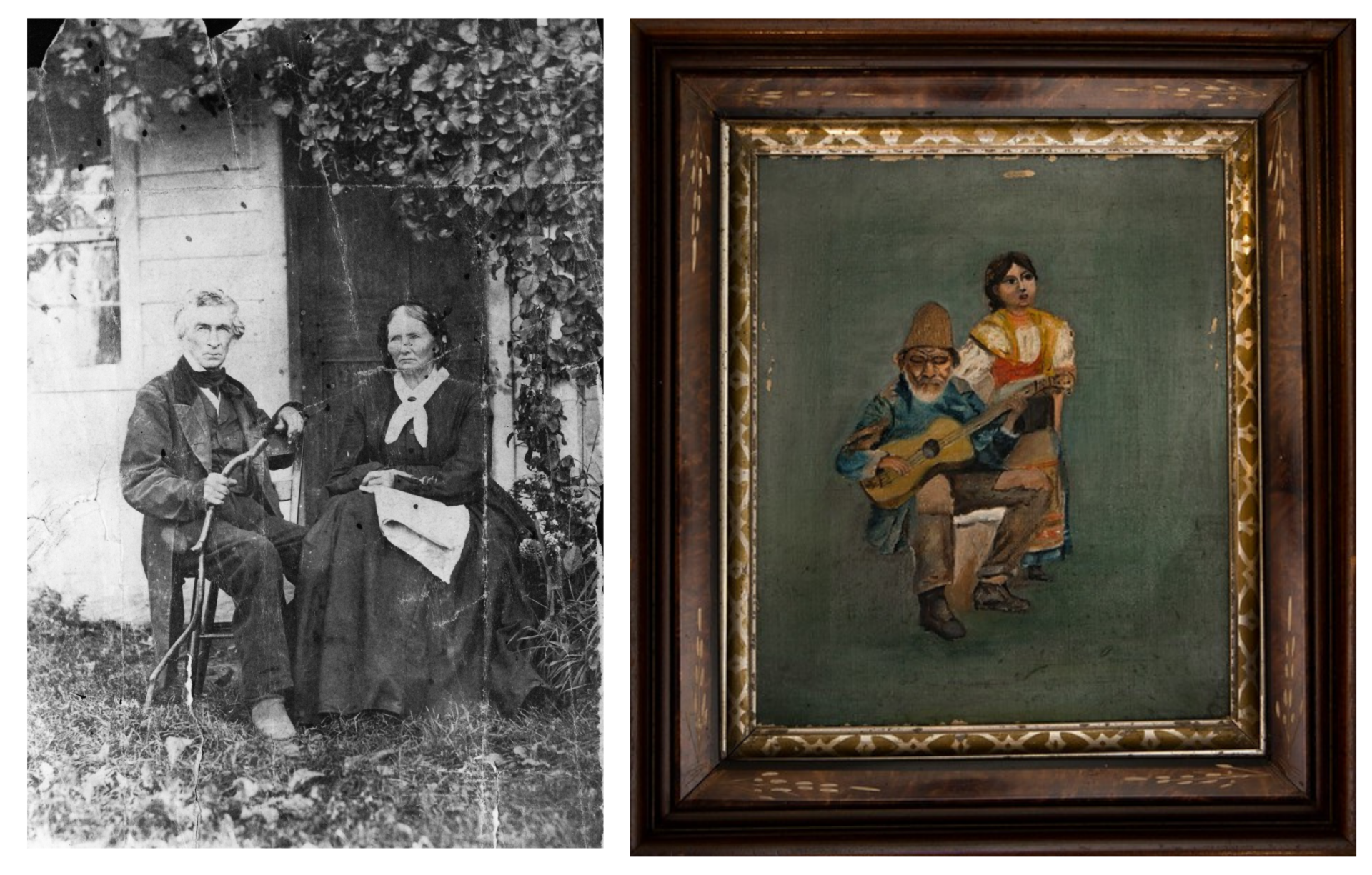
(Left: Sheldon Peck and his wife, Harriet. Right: Old Charley by Susan Peck, c.1856, on loan to the Lombard Historical Society from Sandy Schroeder, Descendant of Sanford Peck. Credit: The Sheldon Peck Homestead)
The Lombard Historical Society acquired the Peck Homestead from Peck descendants in 1996 and began an extensive restoration, with funding and advice from the Illinois State Historic Preservation Office (SHPO). The site was formally added to the National Park Service Network to Freedom in 2011. The Historical Society also applied to have the Peck Homestead included in the National Register of Historic Places, but the application was denied in 2012, citing a lack of historical integrity following the restoration project.
After additional research and following the March roundtable event, the historical society resubmitted the National Register application, which is now awaiting SHPO review.
“At a time when we’re really thinking about whose stories get recognized, listing the Sheldon Peck Homestead helps make sure stories like ‘Old Charley’s’ are preserved and included in our national story,” said Alison Costanzo, Executive Director, Lombard Historical Society.
The Pitfalls of Integrity
Historic significance and integrity are two criteria used to determine a place’s eligibility for the National Register. Integrity asks whether a place still looks and feels as it did historically. It is not the same as condition—a historic resource can be in poor condition and still have integrity—but it is nevertheless focused on the survival of physical features.
While integrity is intended to be a subjective measurement, the integrity requirement privileges places that have had the luxury of remaining unchanged over time, with owners who have the resources to keep historic features in good repair and replace them in kind. Integrity can therefore be a particularly high bar for those with fewer resources and challenging for places that have frequently changed uses, leading to extensive alterations.
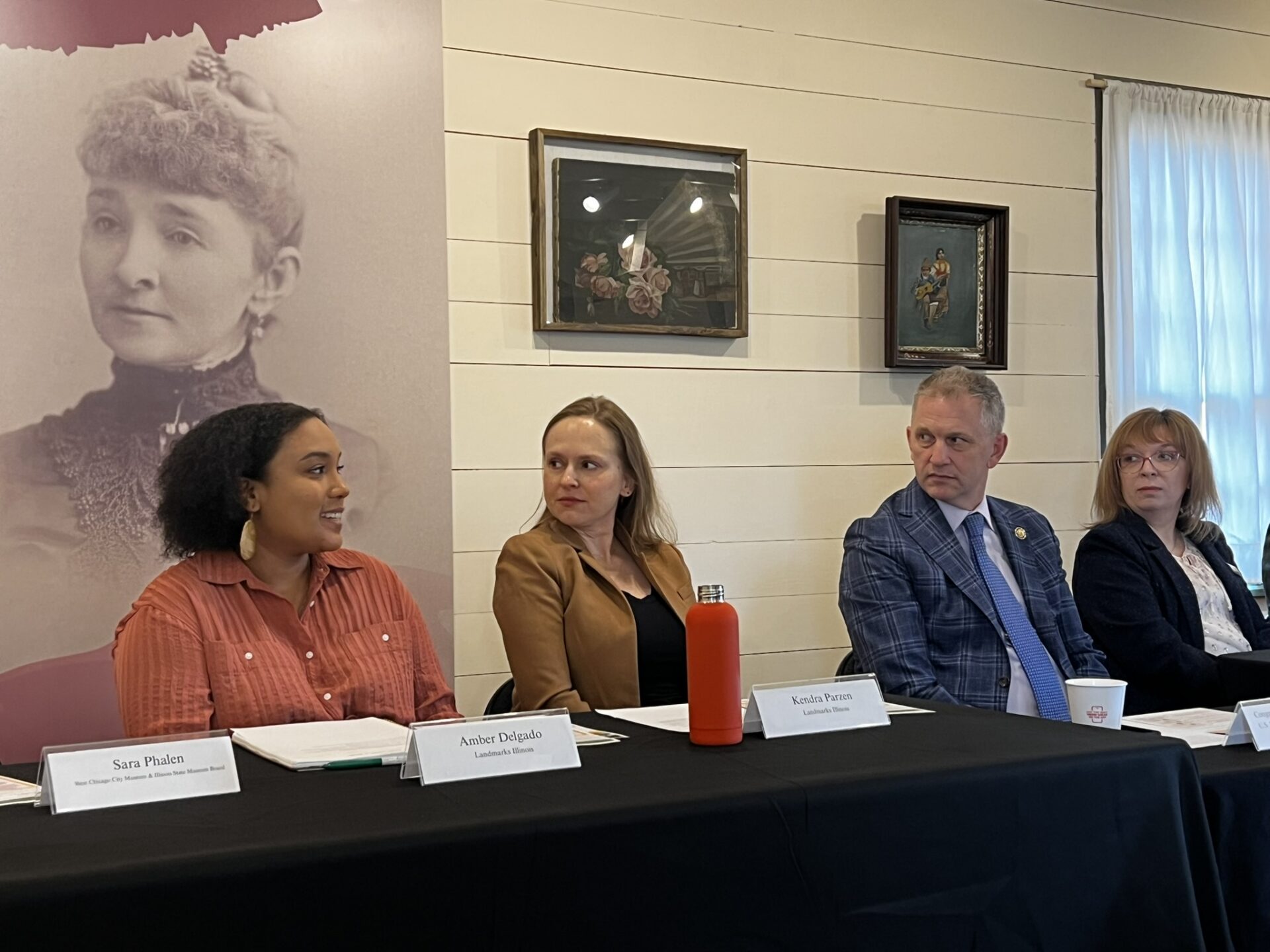
(L-R: Amber Delgado, Kendra Parzen, Rep. Casten and Alison Costanzo at the March roundtable at the Sheldon Pack Homestead.)
The Peck family, while large, had few financial resources, and the homestead shows evidence of materials being reused and only sparingly replaced over their 154-year occupancy. To modernize the house, the original timber and plank frame was stuccoed over early in the 20th century. Although the house was in continuous use as a residence, a central heating system was not introduced until the middle of the 20th century.
Since taking ownership, the Lombard Historical Society has invested heavily in stabilization, restoration and stewardship of the home. If places like the Peck Homestead, with its deep historic importance, are still unable to meet the integrity requirement, what message does that send to other sites that have had fewer resources and more changes over time about their worthiness for National Register listing?
As detailed in Landmarks Illinois’ Relevancy Guidebook, too much emphasis on integrity creates a “culture of preciousness” that prioritizes the material conditions of historic places over their stories. The National Register has special weight as our national record and is also the key to unlocking certain financial incentives and assistance programs. An overemphasis on integrity creates a barrier to entry that can cut off historically important places from these benefits. Rebalancing integrity with historic significance and other considerations, such as their resonance with people and communities today, can provide a path to a more inclusive National Register.