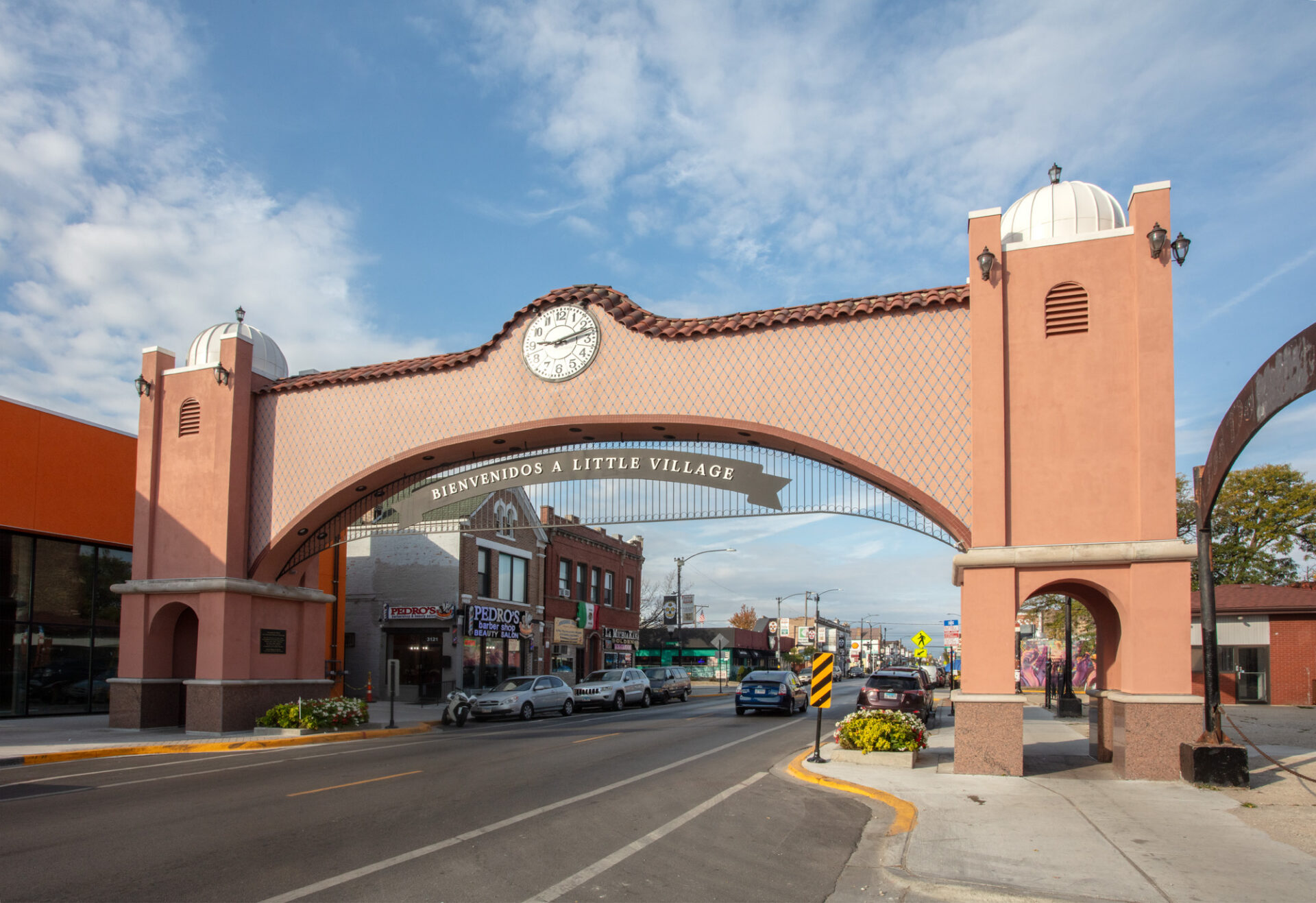
Little Village Arch Restoration Project, Chicago

2026 Landmarks Illinois Richard H. Driehaus Foundation Preservation Award for Restoration

The Little Village Arch, constructed in 1990, is a distinctive gateway spanning W. 26th St. in Chicago. With a banner reading “Bienvenidos a Little Village,” it welcomes people to the commercial and cultural heart of the neighborhood often called the “Mexico of the Midwest.” The stucco and terracotta structure, designed by Mexican American architect Adrian Lorzano, celebrates the heritage and identity of Mexicans and Mexican Americans. It is the only City of Chicago Landmark designed by a Mexican architect and that specifically represents Mexicans and Mexican Americans. It is also one of only a few Mexican-style gateway arches in the United States and features a mechanical clock. After decades of exposure, deterioration, vandalism and deferred maintenance, the arch underwent its first comprehensive restoration following its Chicago Landmark designation in 2022. The restoration team was led by the Chicago Department of Transportation (CDOT). Preservation architecture services were provided by JLK Architects and pro bono assessments were facilitated by Landmarks Illinois and conducted by Wiss, Janney, Elstner Associates. Community stakeholders included the Little Village Chamber of Commerce. By restoring one of the most visible symbols of Little Village’s cultural identity, this project represents a powerful celebration of the community’s heritage along its vibrant commercial corridor.

(Photo credit: Leslie Schwartz)
Additional information

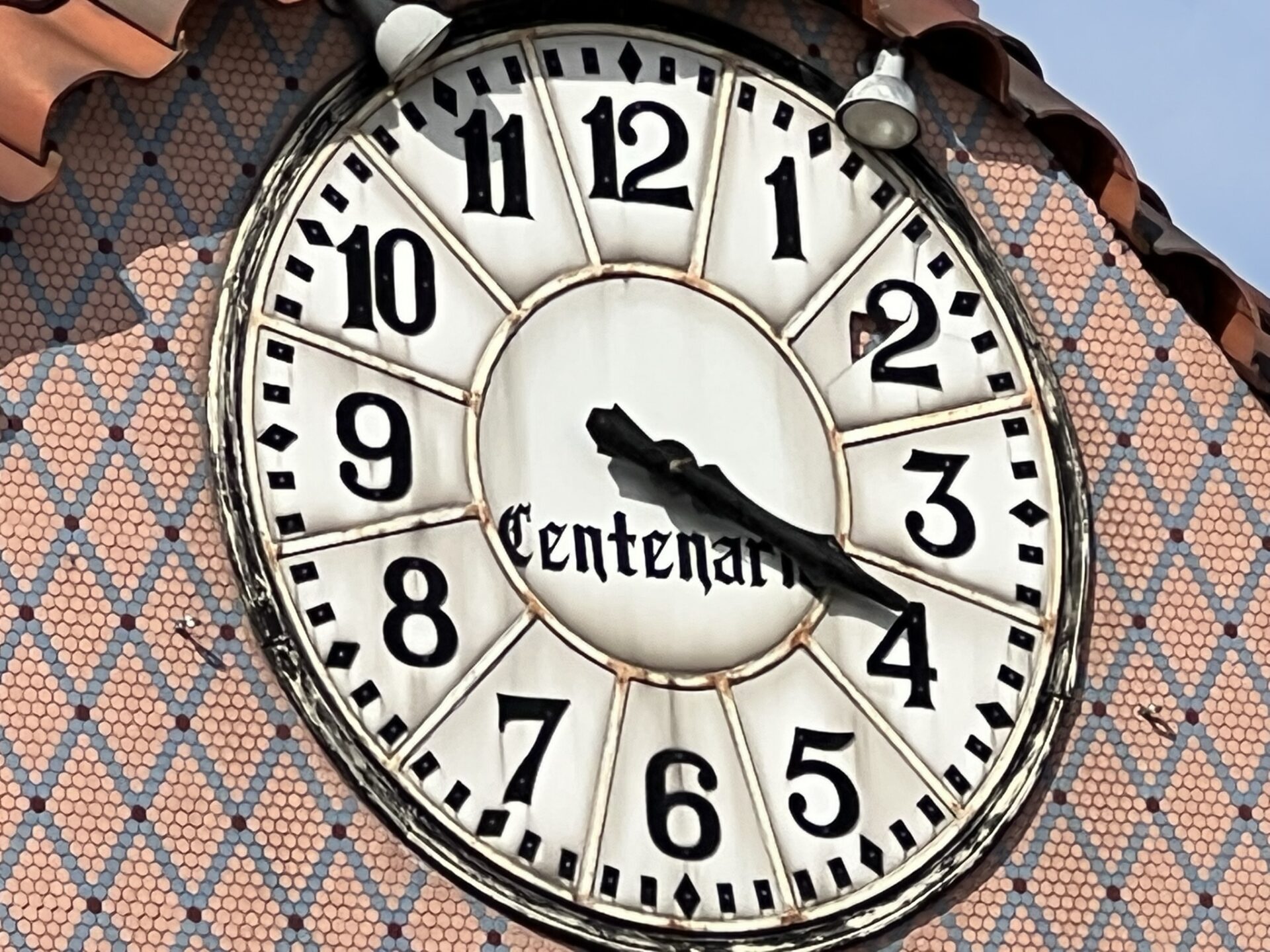
The rehabilitation of the arch included stabilizing its granite bases, decorative limestone and stucco walls, as well as repairing the tile facade and clay roof. The project also included safety updates such as electrical upgrades, new lighting and light fixtures and ADA-compliant paving on public walkways. The arch’s unique clock, donated by former Mexican President Carlos Salinas de Gortari, was also restored through collaboration with Mexico-based clockmaker Relojes Centenario, who used historically accurate materials and craftsmanship to repair the device. The project was paid for with $1.25 million in Tax Increment Financing (TIF) funding.

(Photo information & credit: The arch’s clock before restoration. Credit: Meg Kindelin)

Project Principals

  • Architect: JLK Architects (Project Team: Meg Kindelin, Ashley Boduch & Javier Castaneda)
  • General Contractor: Construction, Inc. (Project Team: Frank Nelson)
  • Owner: CDOT (Project Team: Rajiv Pinto, Julian Silva & Omar Alani)
  • Electrical Consultant: Calor Design Group (Project Team: Mario Berrones & Javier Rodriguez)
  • Consultant Engineer: Civiltech (Project Team: Jack T. Ringness)
  • Clock Restoration: Relojes Centenario & Smith’s Bell and Clock, Inc.
  • Plaque Restoration: Bronze Memorial Co.
  • Local community and neighborhood organizations: The Little Village Chamber of Commerce, the Little Village Community Council and the Office of Alderman Byron Sigcho-Lopez.

(Photo info: The arch’s clock is repaired)

Why is this place important to you?

Meg Kindelin, JLK Architects Project Principal, and Pajiv Pinto, CDOT Project Manager

The design of the arch by Mexican American Architect Adrián Lozano is rooted in traditional Colonial-era Mexican archways seen at religious complexes, haciendas and walled settlements. According to the landmark designation report, the arch is the only of its kind in the city and may also be the only such example north of the Rio Grande River. The arch conveys the significant social and cultural heritage of the Mexican and Mexican American community in Chicago. Its design by a Mexican American Architect and its original construction by Mexican American veterans and contractors, including Ron Baltierra and Dave Ramirez, reflects the importance of the community’s influence in shaping the built environment in the Little Village neighborhood.
Beyond social and cultural heritage, the arch is also associated with the economic significance of the Little Village Neighborhood. The arch spans West 26th Street, which is the second-highest-grossing retail corridor in the City of Chicago. As stated in the landmark designation report, “the community has added and preserved its own significant layer of culture to West 26th Street through language, food, religion, family structure, murals, music and dance.”
The arch became the youngest City of Chicago Landmark in 2022, designated only 32 years after it was built, and the first landmark designed by a Mexican American Architect.
The Little Village Arch is a nationally unique and locally significant public street gateway arch in the City of Chicago. For over thirty years, the arch has spanned West 26th Street in celebration of the heritage and culture of the Little Village Neighborhood. This significant restoration project ensures that the arch will continue to stand for another thirty years, and beyond, to the benefit of the community and all who may visit it.

(Photo Information & credit: A ribbon-cutting ceremony is held after the arch’s restoration. Credit: Ashley Boduch)

How did saving this place impact people in your community?

Meg Kindelin, JLK Architects Project Principal, and Pajiv Pinto, CDOT Project Manager

This project constitutes a significant investment in not only the restoration of the Little Village Arch but also the Mexican and Mexican American neighborhood of Little Village. During the ribbon-cutting ceremony, Mayor Brandon Johnson characterized the project as a first step and vowed to “continue to invest in the strength and vibrancy of Little Village and all of our Mexican communities across the city of Chicago.”
The restoration of Little Village Arch is a testament to the importance of studying and preserving structures and sites of the recent past, especially those that are associated with communities often overlooked by historic surveys and documentation efforts.
The arch is a historic structure – not a historic building that is inhabited or may be more traditionally conceived of as a historic property. This project reflects the ever-broadening reach of the preservation field to include non-buildings, including arches, murals, signs and other aspects of the built environment associated with significant cultural heritage that are deserving of study, protection and restoration.

(Photo information and credit: During iron grille banner reinstallation. Credit: Ashley Boduch)

Support our advocacy

Be a voice for the future of our communities by supporting Landmarks Illinois. Our work enhances communities, empowers citizens, promotes local economic development and offers environmentally sound solutions.

Become A Member