Aspire Center for Workforce Innovation, Chicago

2026 Landmarks Illinois Richard H. Driehaus Foundation Preservation Award for Rehabilitation

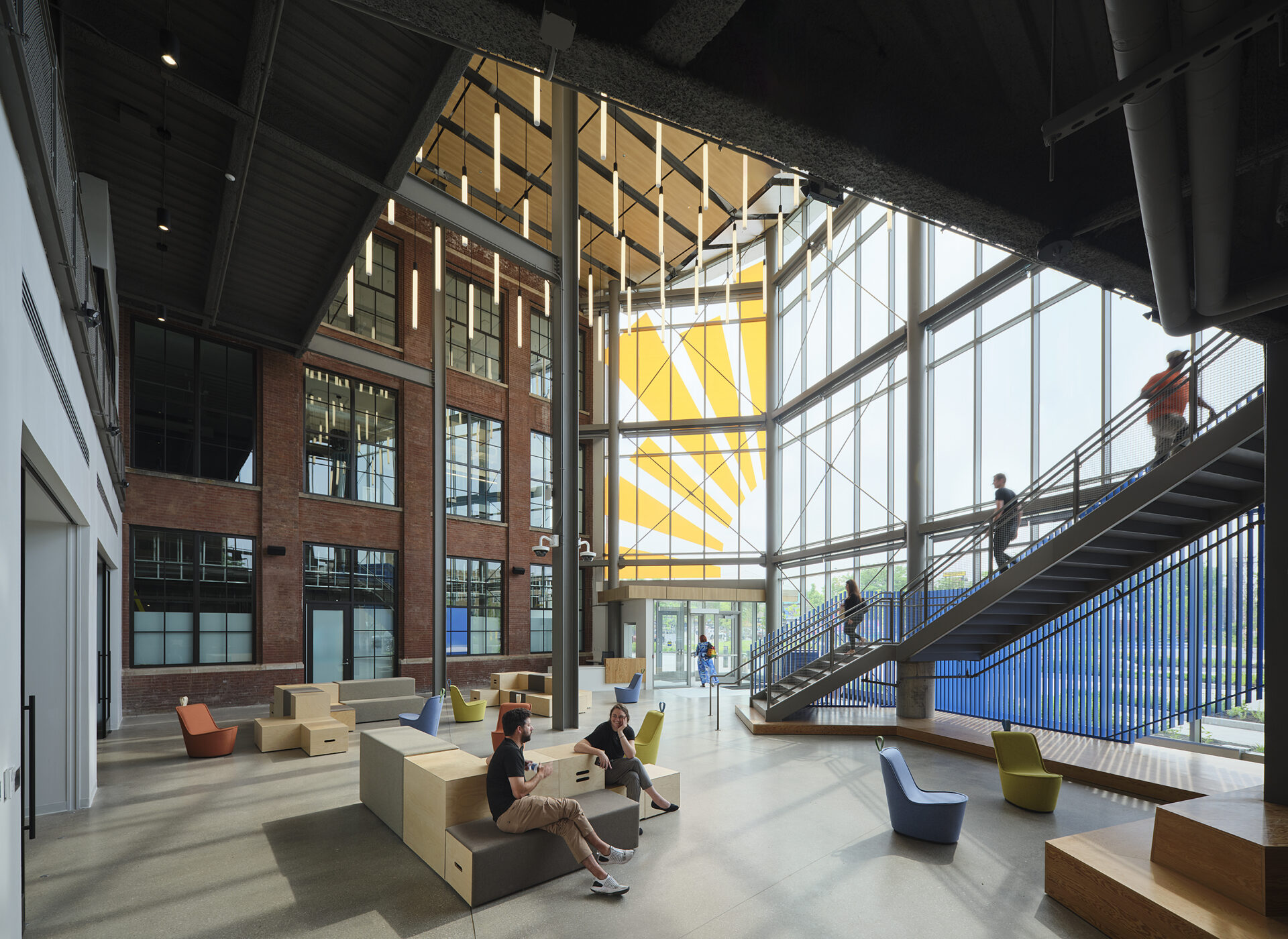
The Aspire Center for Workforce Innovation is a workforce development center and community services hub located in a reimagined vacant former public school in Chicago’s Austin neighborhood. Robert Emmet Elementary School, built in 1911, served the Austin neighborhood as a public elementary school for over a century until it was one of the 50 public schools closed by the City of Chicago in 2013. Wary of private developers purchasing a building that had long been a pillar of the neighborhood, Austin residents organized to form Aspire Center Development Corporation and raised $20,000 to support a community-focused redevelopment project led by Austin Coming Together & Westside Health Authority, which purchased the building.

The $47 million adaptive reuse project required extensive rehabilitation of the former school to meet building code requirements, including selective demolition. The property now includes 69,100 gross square feet of building area and 13,930 square feet of new addition and roof deck. As a community center, the Aspire Center for Workforce Development provides job training, financial coaching, legal assistance, reentry support and career services in one location. The center is anticipated to create 50 new jobs, support entrepreneurship and expand access to workforce training opportunities. With community partnerships with the Jane Addams Resource Corporation, BMO, Legal Aid Chicago and the Cook County Public Defender’s Freedom Defense Center, the Aspire Center is a truly unique example of grassroots community preservation and advocacy.
Additional information

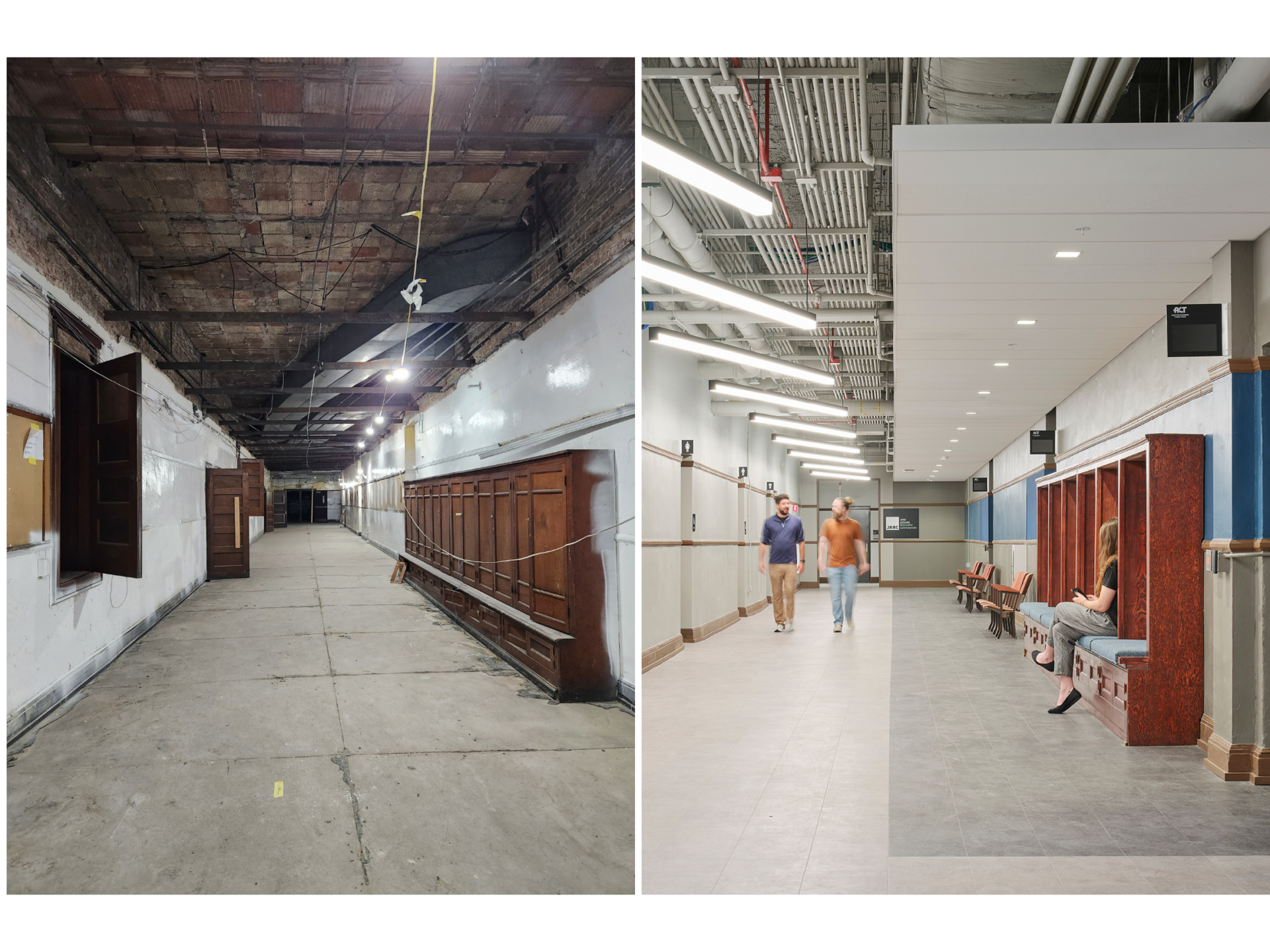
The Aspire Center’s rehabilitation included structural reinforcements; new mechanical, electrical, plumbing and life-safety systems; accessibility improvements, upgraded entrances, elevator access, energy-efficient windows and insulation and improved lighting, landscaping and pedestrian paths.

This project was supported with a robust capital stack that included $10.43 million in New Markets Tax Credits; $12.25 million in City of Chicago Tax Increment Financing (TIF) funds support; a $10 million State of Illinois capital grant; and bridge financing. It also received philanthropic and corporate support, including $5 million from BMO and the United Way of Metro Chicago; $2 million from the Chicago Community Trust; $500,000 from the Pritzker Traubert Foundation, $500,000 from Crown Family Philanthropies, $250,000 from Blue Cross Blue Shield of Illinois; and the aforementioned commitment from Austin residents.

(Photo credit: Tom Harris)

Project Principals

  • Developers: Austin Coming Together & Westside Health Authority
  • Architect: Lamar Johnson Collaborative
  • Owner’s Representative: Project Management Advisors
  • General Contractor: Blinderman Construction
  • Historic Exhibit: Borderless Studio, Span & Navillus Woodworks

(Before and after inside the Aspire Center. Right photo credit: Tom Harris)

Why is this place important to you?

Natalie Goodin, Interim Executive Director

The Aspire Center for Workforce Innovation is the result of a vision that Austin residents built for themselves. The building was purchased by the West Side Health Authority in 2018 and became a focal project of Austin’s Quality of Life Plan as a way to revitalize the two commercial corridors that intersect there, Central Avenue and Madison Street. As a focal project, there was a simple but powerful idea: transform the former school into a workforce center connecting residents to career development programs, vocational training, entrepreneurship resources and access to high-demand fields like health care and manufacturing. Rather than treating the shuttered Emmet Elementary School building as a symbol of loss, community leaders saw it as an asset waiting to be reactivated — a physical anchor around which economic opportunity could be rebuilt.

That reactivation is exactly what the Aspire Center represents today. The building, redesigned by Lamar Johnson Collaborative, reopened its doors in June 2025 as a modern, welcoming facility. Preserving the school and giving it new life carries real significance for a neighborhood that has too often seen its institutions close rather than transform. Where a classroom once sat empty, tenants like Jane Addams Resource Corporation, Westside Health Authority, Austin Coming Together and BMO Bank now deliver job training, financial coaching, small business support and legal aid — work that directly answer the goals residents themselves identified years earlier.

A community that was asked to imagine its own future got the chance to see that future built, in a building tied to its own history. It stands as proof that disinvestment is not a permanent condition, but that with sustained collaboration among residents, nonprofits and institutional partners, a neighborhood can reclaim its own assets and repurpose them for the people who live there. For Austin, the Aspire Center isn’t just a workforce development hub, it’s evidence that community-led planning can, over time, become community-led placemaking.

How did saving this place impact people in your community?

Darnell Shields, Executive Director of Austin Coming Together

Built in 1893, six years before the Village of Austin was annexed into Chicago, Emmet served generations of residents as a place where children learned, educators built careers and families invested in the future. When the school closed and later faced the possibility of outside ownership, residents organized to protect a place deeply connected to Austin’s history and community life.

Rather than allowing the building’s future to be shaped by outside interests, the community helped reimagine it around priorities residents had identified for themselves, which included workforce development and greater access to economic opportunity. That vision ultimately transformed the former school into the Aspire Center for Workforce Innovation.

Residents now come through its doors to build job skills, pursue living-wage careers, strengthen their financial futures, access legal support and connect with resources to create greater stability for themselves and their families. Public spaces have also returned the building to community life as a place to gather, build relationships and connect.

For generations, Emmet prepared young people for their futures. Today, the Aspire Center carries that legacy forward through a renewed building and a new mission, once again filling its halls with learning, opportunity and possibility for Austin residents and their families.


Support our advocacy

Be a voice for the future of our communities by supporting Landmarks Illinois. Our work enhances communities, empowers citizens, promotes local economic development and offers environmentally sound solutions.

Become A Member